Get Uncomfortable: How Fighting Your Own Creative Instincts Leads to Your Best Work

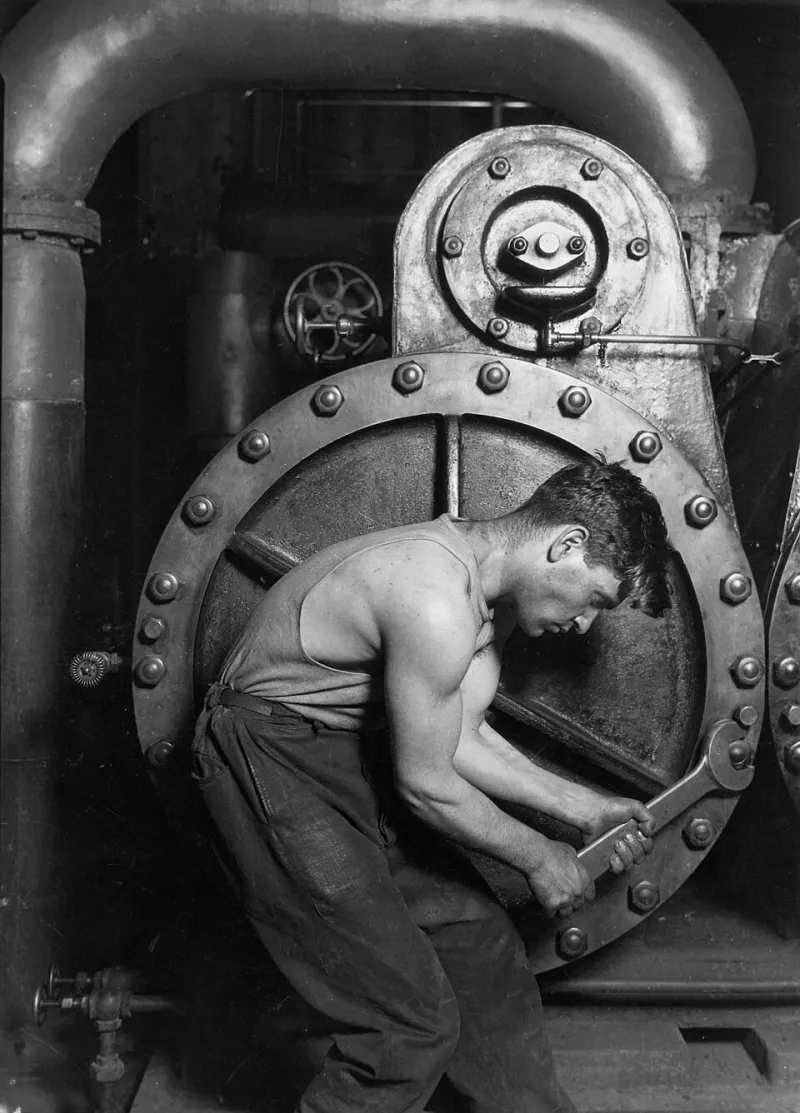
Photo: Oleg Yunakov, CC BY-SA 4.0, via Wikimedia Commons
The Comfort Zone Is a Creative Dead End
Here's something most creatives don't want to hear: the stuff that comes naturally to you is probably the least exciting thing about your work. Not because your instincts are bad — they're not. But instincts, by definition, are grooves worn deep through repetition. And grooves, no matter how elegant, eventually become ruts.
The artists and designers who consistently produce work that stops people mid-scroll aren't the ones who've perfected their default settings. They're the ones who've learned to deliberately introduce friction into their process. Real, uncomfortable, makes-you-want-to-quit friction.
This isn't about suffering for the sake of it. It's about understanding that resistance — the productive kind — is where growth actually lives.
What Productive Discomfort Actually Looks Like
Let's be specific, because "get out of your comfort zone" has become such hollow advice that it barely registers anymore.
Productive discomfort in a creative context means choosing constraints that genuinely challenge your existing framework. A graphic designer who lives and breathes clean, minimal layouts forcing themselves to work in maximalist collage. A photographer who shoots exclusively in natural light picking up artificial studio strobes for a full month. A writer who's built a career on tight, punchy copy committing to long-form narrative for a single project.
These aren't arbitrary exercises. Each one forces a renegotiation with your own assumptions. When your default toolkit is suddenly unavailable, you stop executing and start thinking again.
David Bowie did this his entire career — not just metaphorically but structurally. The Berlin Trilogy happened because he physically relocated, changed his collaborators, and adopted compositional methods that were genuinely foreign to him. The result wasn't just a new sound; it was a reinvention so complete that it influenced popular music for decades. He didn't stumble into that. He engineered the discomfort.
The Unfamiliar Medium Problem
One of the most underrated forms of creative friction is picking up a medium you're genuinely bad at.
There's something almost embarrassing about being a beginner again, especially once you've built real skill in your primary discipline. Your hands don't do what your brain wants. The tools feel wrong. The output looks nothing like what you envisioned. It's frustrating in a way that's hard to describe to someone who hasn't experienced the gap between taste and ability.
But here's what that frustration does: it strips away the autopilot.
When you're working in a medium you've mastered, a huge percentage of your decisions happen below conscious thought. You know what works. You've internalized the rules so deeply that you apply them without realizing it. That efficiency is valuable — but it's also a cage.
Working in an unfamiliar medium forces every single decision to become conscious. You have to think about line weight, color mixing, composition, pacing, texture — whatever the medium demands — because you can't fall back on muscle memory. And that heightened awareness? It follows you back to your primary work.
Illustrators who spend time learning ceramics start thinking about form and dimension differently. Filmmakers who try their hand at still photography develop a sharper instinct for the decisive moment. The cross-contamination is real, and it's valuable in ways that are hard to predict in advance.
Collaboration as Controlled Chaos
Working with people who challenge your worldview is another form of friction that creatives tend to underestimate — or actively avoid.
It's human nature to seek out collaborators who affirm your aesthetic sensibilities. It feels productive. Projects move faster when everyone's on the same page. But that efficiency often comes at the cost of genuine surprise.
The most generative creative partnerships in history have rarely been between like-minded people. They've been between people who fundamentally see differently and are willing to argue about it. Think about the tension between Steve Jobs and Jony Ive, or the creative friction between directors and cinematographers who have genuinely competing visions for how a scene should feel. That tension isn't a bug — it's the whole point.
When you collaborate with someone whose instincts oppose yours, you're forced to articulate things you've never had to articulate before. Why does this color feel right? Why does this layout need to breathe here? Defending your choices — really defending them, to someone who isn't going to just nod along — sharpens your thinking and occasionally reveals that you were wrong in ways you couldn't have discovered alone.
Adopting a Philosophy You'd Normally Reject
This one takes the most nerve, but it might be the most powerful form of creative friction available.
Pick an artistic philosophy that runs counter to your own and commit to it for a defined period. If you're a maximalist, spend a month operating under strict minimalist principles. If you're deeply process-oriented, try working with pure intuition, no planning allowed. If you've always believed art should be accessible and populist, make something deliberately esoteric and see what happens.
You're not abandoning your values. You're stress-testing them.
What tends to happen is one of two things: you discover that the opposing philosophy has genuine merit you'd been dismissing, and your work expands to incorporate it — or you emerge from the experiment with a far clearer, more articulate understanding of what you actually believe and why. Either outcome makes you a stronger creative.
The painter Chuck Close spent years working in photorealism with a level of technical precision that bordered on obsessive. When a spinal artery collapse left him with limited motor function, he was forced to adopt a completely different approach — working in a grid-based, highly abstracted method. Rather than ending his career, it opened a new chapter that many critics consider his most significant. He didn't choose that friction. But the principle holds: the constraint forced a reinvention that pure intention never would have produced.
Building Friction Into Your Practice Intentionally
You don't have to wait for a crisis to introduce productive discomfort into your work. You can engineer it.
A few practical ways to start:
- Set medium constraints on a schedule. Once a quarter, spend two weeks working in a medium you've never seriously explored. Commit to it long enough to get past the initial frustration.
- Seek out one collaborator who disagrees with you. Not someone combative for the sake of it, but someone whose aesthetic sensibility genuinely differs from yours. Work on something together.
- Identify your most automatic creative decisions — the ones you make without thinking — and make the opposite choice for an entire project. See what breaks and what surprises you.
- Study movements or philosophies you've dismissed. Not to convert, but to understand. The Brutalists, the Dadaists, the hyper-maximalists — whatever you've written off — spend real time with it.
The goal isn't to become someone else. It's to become a more complete version of yourself — one who's tested their assumptions against genuine resistance and come out the other side knowing exactly what they stand for.
Friction Is the Point
Creativity that only flows downhill — always following the path of least resistance, always defaulting to what feels natural — tends to produce work that's technically proficient and emotionally inert. It's the difference between competence and resonance.
The breakthroughs, the pieces that surprise even you, the work that seems to come from somewhere deeper than your usual bag of tricks — that stuff almost always traces back to a moment when you were working against yourself. When something was hard in the right way.
Lean into that. Build it into your process deliberately. Because the most interesting version of your creative voice isn't the one that comes easiest — it's the one that had to fight to get out.