Stop Chasing Original: How Leaning Into Your Influences Actually Makes You Unforgettable
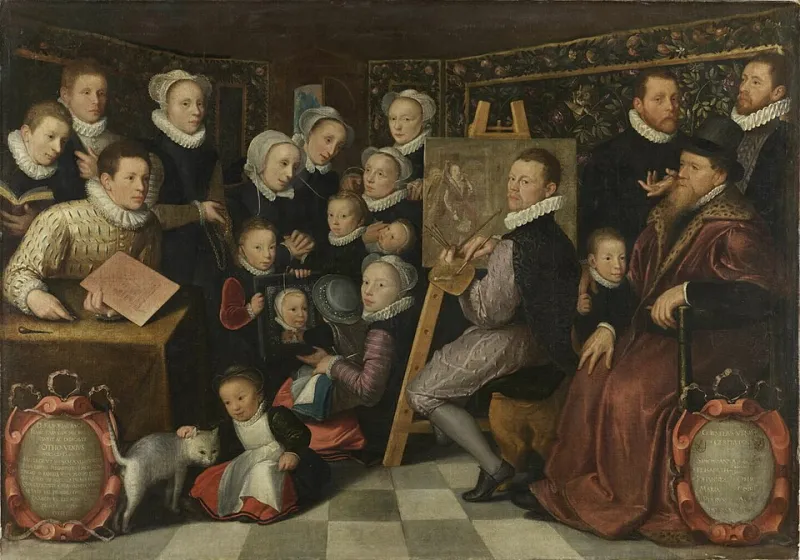
Photo: Otto van Veen, Public domain, via Wikimedia Commons
There's a particular kind of creative paralysis that doesn't get talked about enough. It's not writer's block, exactly. It's not burnout. It's the freeze that happens when you sit down to make something and immediately start policing yourself — is this too derivative? Has someone done this before? Am I just copying?
If that internal monologue sounds familiar, you're in good company. And here's the uncomfortable truth: that obsession with being original might be the single biggest obstacle standing between you and your actual breakthrough.
The Originality Trap Is Real — and It's Everywhere
American creative culture has a complicated relationship with influence. On one hand, we celebrate innovation and disruption. On the other, we quietly shame anyone who seems too inspired by what came before. The result? A whole generation of creators tying themselves in knots trying to make something that has never existed, rather than making something that only they could make.
But here's what gets lost in that conversation: originality isn't a starting point. It's an outcome.
You don't sit down and decide to be original. You show up, you work honestly with the things that genuinely move you, and over time — through repetition, refinement, and a thousand small decisions — something emerges that couldn't have come from anyone else. That's your voice. And weirdly, it usually sounds a lot like your influences run through a very specific human filter: you.
What the Most Celebrated Creators Actually Did
Take a hard look at the creative people we tend to call visionaries and you'll find the same story playing out over and over. They weren't trying to invent something from scratch. They were deeply, almost obsessively, engaged with the work that came before them.
Quentin Tarantino has never hidden the fact that his films are built from a lifetime of watching movies most people forgot existed. He didn't try to erase those influences — he stacked them, remixed them, and filtered them through his own sensibility until something undeniably Tarantino came out the other side.
Graphic designers like Paula Scher have talked openly about how their most iconic work grew directly from studying historical styles — Swiss International typography, Constructivist posters, mid-century American commercial art. She didn't pretend those references didn't exist. She owned them so completely that her work became a new chapter in the same conversation.
The pattern holds in music, architecture, fashion, illustration — you name it. The people who feel most original are almost always the ones who stopped apologizing for their influences and started going deeper into them.
Why "Genuine" Beats "Novel" Every Time
There's a reason audiences connect more powerfully with work that feels honest than with work that feels clever. Novelty is a cognitive experience — it registers, it surprises, and then it fades. Genuine resonance is something else entirely. It's the feeling that whoever made this thing meant it, that it came from somewhere real.
When you make work that reflects your actual interests — the stuff you'd geek out about even if no one was watching — it carries a kind of specificity that manufactured originality can never fake. The references land differently. The choices feel considered rather than calculated. The whole thing has a texture that people can't always name but absolutely can feel.
This is the paradox at the heart of creative authenticity: the more you try to sound like no one, the more you sound like everyone else who's trying to sound like no one. But the moment you let yourself fully inhabit your actual taste? That's when things get interesting.
How to Actually Apply This (Without Just Copying)
Giving yourself permission to lean into your influences is not the same thing as copying. The distinction matters, and it's worth spelling out.
Copying is replication without transformation. Influence is what happens when something you love passes through your hands, your perspective, your particular set of experiences, and comes out changed. The gap between those two things is where your voice lives.
A few ways to start closing that gap:
Make a real list of what you actually love. Not what you think you should love, not what's critically respected, not what's trending. What do you find yourself returning to? What makes you stop scrolling? What would you study even if it had zero career value? That list is a map.
Go deeper, not wider. Rather than consuming broadly in search of something new, go further into the things already on that list. Read the interviews. Study the process. Find the influences behind the influences. The deeper you go, the more specific — and the more yours — your perspective becomes.
Let the work accumulate. Your voice doesn't announce itself on day one. It shows up gradually, in the patterns that repeat across a body of work. Give yourself enough output to see those patterns emerge. You can't edit your way to a voice — you have to make your way there.
Stop auditing every piece for originality. Make the thing that excites you. Make the thing that scares you a little because it feels too personal or too specific or too influenced by something you love. Those are almost always the pieces that land.
The Permission You've Been Waiting For
If there's one thing worth taking away from all of this, it's that the creative breakthrough you're looking for probably isn't on the other side of more novelty-hunting. It's on the other side of honesty.
The work that makes people stop and say I've never seen anything quite like this almost never came from someone trying to make something no one had ever seen. It came from someone who cared so genuinely and so specifically about what they were making that their own fingerprints ended up all over it.
Your influences aren't a liability. They're raw material. The goal was never to erase them — it was always to use them so fully, so personally, that the result couldn't belong to anyone else.
So stop chasing original. Start chasing honest. The rest tends to follow.