That Creative Choice You're Cringing About? It Might Be Your Masterpiece in Disguise
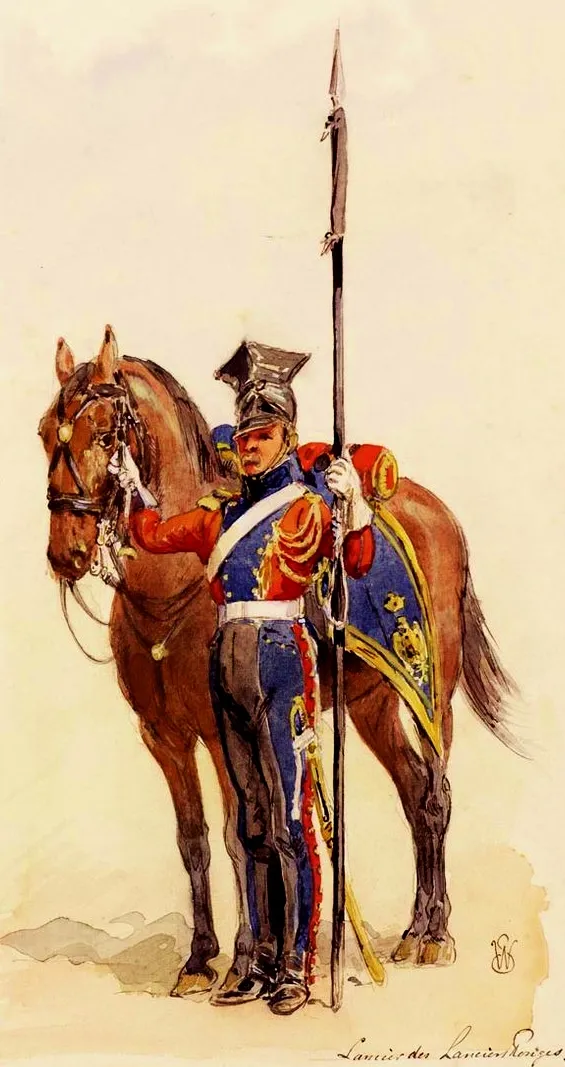
Photo: Willem Constantijn Staring (1865-1916), Public domain, via Wikimedia Commons
There's a specific kind of stomach-drop feeling that comes right after you commit to a bold creative decision. You've just done something weird. Something off-script. Maybe you painted the background an ugly, unsettling green when every instinct said go neutral. Maybe you used a typeface that breaks every rule you learned. Maybe you wrote a piece that doesn't fit neatly into anything you've made before.
And then you wait. You stare at it. You wonder if you've completely lost the plot.
Here's the thing nobody tells you early enough: that exact feeling? It's one of the most reliable signals that you're onto something real.
Why the Second-Guess Is Actually a Green Light
Creative doubt isn't random. It doesn't show up when you're playing it safe — when you're making the thing that looks like everything else you've made, or everything everyone else is making. Doubt shows up at the friction point, which is the moment where your instincts and your training collide head-on.
Your training says: this is unfamiliar, this is risky, this might not land.
Your instincts say: but I had to do it this way.
That tension is where originality lives. The problem is we're conditioned to resolve it as fast as possible, usually by retreating to safer ground. We sand down the edges. We make the weird choice a little less weird. We talk ourselves out of the thing that scared us and replace it with something more comfortable, more legible, more expected.
And in doing so, we accidentally edit out the part of ourselves that would have made the work unforgettable.
The Psychology Behind Creative Regret
Research in decision psychology has long pointed to something called "anticipated regret" — the way we imagine future embarrassment and let that imagined discomfort steer us away from riskier choices in the present. In creative work, this plays out constantly. We don't just evaluate our choices based on what they are right now. We evaluate them based on how we imagine an audience will receive them, often an imaginary, hypercritical audience that doesn't actually exist.
The result is a kind of creative self-censorship that kicks in before anyone else has even seen the work. We become the harshest editor of our own boldest ideas, and we do it preemptively.
What's worth understanding is that this instinct evolved to protect us socially, not creatively. In a creative context, playing it safe doesn't protect you — it just makes you easier to overlook.
Artists Who Almost Killed Their Own Defining Work
This isn't just theory. The history of art, design, and culture is full of creators who nearly abandoned the exact choices that ended up becoming their signatures.
Take David Bowie's Ziggy Stardust era. By most conventional measures of early-'70s rock, the androgynous alien persona was a gamble that should have alienated a mainstream audience. Bowie himself was uncertain enough that the character went through multiple near-cancellations before it launched. What felt like creative overreach at the time became one of the most iconic artistic personas in music history.
Or consider the early critical reception of Jean-Michel Basquiat's work — raw, text-heavy, deliberately rough in ways that fine art circles found uncomfortable. Basquiat could have smoothed it out. He didn't. What looked like artistic immaturity to some observers was actually a fully realized visual language that took the art world years to catch up with.
Closer to the design world, Milton Glaser almost didn't include that rainbow stripe on the I ♥ NY logo variation he sketched on a paper bag in the back of a cab. He thought it was too much. He submitted it anyway. The rest is history you've seen on approximately ten million T-shirts.
The pattern here isn't coincidence. The choices these creators second-guessed the most were the ones that broke from existing templates — and breaking from existing templates is, almost by definition, what creates a new one.
How to Sit With Discomfort Long Enough to Learn From It
So how do you actually develop the tolerance to stay with an uncomfortable creative decision instead of immediately reversing course? A few things that genuinely help:
Give it a time buffer before you judge it. The feeling of wrongness is often strongest in the first 24 to 48 hours after making a bold choice. It's not a reliable signal of actual quality — it's just unfamiliarity. Build in a mandatory waiting period before you decide anything needs to change.
Separate "I don't like this" from "this doesn't work." These are two completely different problems. Personal discomfort with a creative choice is about your relationship to the familiar. Something not working is about function and communication. Learn to ask which one you're actually dealing with.
Document your doubts instead of acting on them immediately. Keep a running note of the choices you're unsure about. Revisit that list a month later. You'll start to notice patterns — which kinds of doubts evaporated on their own, and which ones pointed to something worth revising. Over time, this builds a personal map of where your instincts are trustworthy.
Look for the logic in your own impulse. When you made the weird choice, something drove you there. Try to articulate what it was, even imperfectly. If you can find the internal logic of a bold decision, you can evaluate it more clearly than if you're just reacting to the feeling of strangeness.
The Retrospective Always Looks Different
One of the stranger truths about creative work is that the meaning of a decision changes over time. A choice that looks reckless in isolation often looks inevitable once it's part of a larger body of work. Context accumulates. Patterns emerge. What felt like a one-off gamble starts to reveal itself as the foundation of something consistent.
This is why so many artists describe their signature style as something they discovered rather than designed. They didn't set out to build a recognizable voice. They made a series of uncomfortable choices, sat with them long enough to understand them, and eventually recognized that the discomfort was pointing toward something true about how they see the world.
Your worst creative decision today isn't a mistake waiting to be corrected. It might be the beginning of a language only you can speak — one that just needs a little more time before it becomes fluent.