Ditch the Highlight Reel: How Getting Messy Unlocks Your Greatest Creative Work
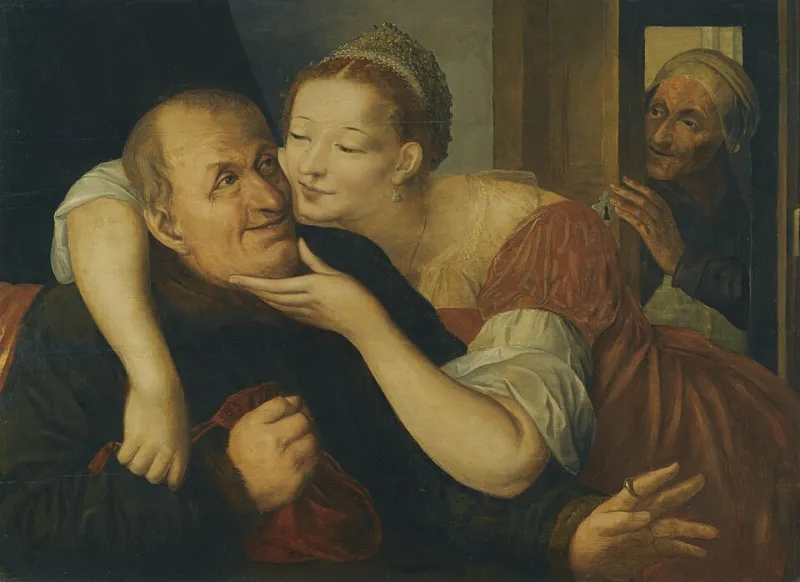
Photo: Jan Matsys, Public domain, via Wikimedia Commons
There's a particular kind of paralysis that hits somewhere around the third revision. You've tweaked the composition, second-guessed the color palette, rewritten the caption four times, and now the whole thing feels sterile. Overworked. Dead on arrival. Sound familiar?
Perfectionism has a great PR team. It disguises itself as high standards, as professionalism, as caring about your craft. But underneath all that, it's usually just fear — fear of being seen mid-stumble, fear of putting something out there that doesn't immediately scream "I know what I'm doing."
Here's the uncomfortable truth: the cleanest version of your work is rarely the most powerful version.
The Myth of the Pristine Portfolio
We've been conditioned — especially in the age of Instagram aesthetics and perfectly curated Behance profiles — to believe that credibility lives in polish. Show only the wins. Present only the final cut. Keep the outtakes buried.
But audiences are smarter than we give them credit for. They can sense when something has been sanded down too smooth. There's a kind of uncanny valley in creative work where over-refinement strips out the humanity, and what's left feels technically correct but emotionally hollow.
Think about what actually stops you mid-scroll. Nine times out of ten, it's not the flawless product shot — it's the sketch that still has the pencil lines showing. The rough cut with the director's voice audible in the background. The half-finished mural photographed at 2 a.m. with bad lighting. Process is magnetic in a way that polish simply isn't.
What the Greats Actually Did
David Bowie famously described his creative method as deliberately putting himself in situations where he didn't know what he was doing. He'd pick up instruments he couldn't play, write in styles he hadn't mastered, and force himself into productive discomfort. Heroes, Low, Ziggy Stardust — none of those records came from a place of confident mastery. They came from someone willing to look confused in front of the microphone.
On the visual side, Jean-Michel Basquiat built an entire aesthetic around rawness. His work looked unfinished by design — crossed-out words, exposed canvas, anatomical diagrams that seemed like they were still being figured out in real time. That wasn't a lack of skill. It was a deliberate refusal to let the work calcify into something too resolved.
More recently, animator and illustrator Malika Favre has talked openly about sharing early-stage work with her audience, inviting people into the decision-making process rather than presenting a fait accompli. The result? A community that feels genuinely invested, not just passively impressed.
The pattern here isn't accidental. These creators understood that the journey is the content.
Why Perfectionism Actually Costs You
Beyond the creative quality argument, there's a straight-up practical cost to holding everything back until it's "ready."
First, you publish less. And publishing less means less feedback, slower growth, and a portfolio that moves at a crawl. The creators building real momentum right now are the ones who treat their output like a conversation, not a press release.
Second, you train yourself to be risk-averse. Every time you kill a piece before it ships because it doesn't feel perfect, you're reinforcing the neural pathway that says imperfect = dangerous. Do that enough times and you'll find yourself incapable of starting anything bold, because bold things are inherently unpolished at the start.
Third — and this one stings — you miss the chance to document your evolution. The rough work you're embarrassed about today is the origin story someone will reference in a profile about you five years from now. Your early, messy experiments are evidence of growth. Hiding them doesn't make you look more professional; it just makes your trajectory invisible.
Sharing Work-in-Progress Without Torching Your Credibility
Okay, so embracing the mess doesn't mean posting every half-baked doodle with zero context and calling it vulnerability. There's a way to do this that's strategic and genuine at the same time.
Frame the intention, not the incompleteness. When you share something unfinished, give it a little context. "Exploring a new direction with texture here — not sure where it lands yet" is very different from just dropping a rough sketch with no explanation. One invites the audience in; the other just looks like you forgot to finish.
Document the decision points. The most compelling process content isn't just before and after — it's the moments where you made a call. Why did you scrap the first version? What problem were you trying to solve with the redesign? Those micro-decisions are where your expertise actually lives, and sharing them builds far more credibility than a finished piece ever could on its own.
Separate your platforms intentionally. Your formal portfolio or client-facing work can still be curated and polished. Meanwhile, your social presence, newsletter, or blog becomes the place where you think out loud. You don't have to choose between professional and human — you just need different venues for each.
Set a "good enough to learn from" bar instead of a "ready to impress" bar. Ask yourself: does this piece contain something worth reacting to? Does it move the conversation forward? If yes, it's ready enough. Perfection isn't the standard. Usefulness is.
The Real Flex Is Showing Up Anyway
There's a certain kind of creative confidence that only comes from publishing things you're not entirely sure about. It's different from the confidence you get from nailing a brief or landing a big client. It's quieter, more durable — the kind that comes from knowing you can survive putting imperfect work into the world and still be standing the next morning.
The messy middle of any creative project — where nothing is working, where the original concept feels naive, where you've got seventeen browser tabs open and zero clarity — that's not the part to hide. That's the part that proves you're actually making something real.
Polish is a finishing move. It's not where the work gets made.
So the next time you're tempted to sit on a piece for another two weeks because it's not quite there yet, ask yourself what you're actually waiting for. Perfection, or permission? Because one of those is worth waiting for. The other one was never coming anyway.