When Two Voices Become None: The Hidden Cost of Creative Collaboration
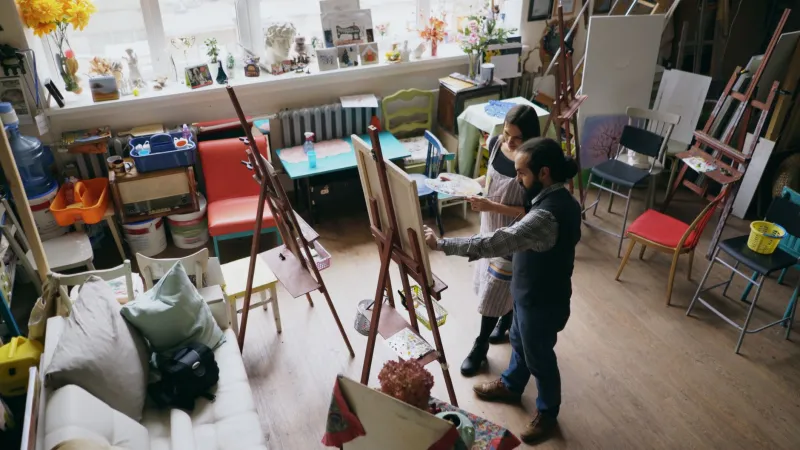
Everybody loves a good collab story. Two artists meet, sparks fly, and something neither could've made alone gets born into the world. It's the stuff of creative legend — think Lennon and McCartney, the Coen Brothers, Jay-Z and Kanye on Watch the Throne. Collaboration gets romanticized so hard in creative culture that questioning it almost feels like career heresy.
But here's the thing nobody talks about at the panel discussion or the portfolio review: sometimes the people you work with — even the talented, well-meaning, genuinely exciting ones — can quietly hollow out the most interesting parts of what you make.
That's not an indictment of collaboration as a concept. It's a call to be honest about what it costs, and when the price is too high.
The Averaging Effect Nobody Warns You About
When multiple creative minds enter the same room, something predictable tends to happen. Edges get softened. The weird idea that only one person championed gets outvoted. The choice that felt risky but right gets negotiated into something safer, more palatable, more broadly agreeable.
This isn't anyone's fault. It's just group dynamics doing what group dynamics do. Consensus naturally pulls toward the middle. And the middle, creatively speaking, is where distinctive voices go to disappear.
Think about the last time you worked with a client or a creative partner and walked away feeling like the final product was somehow less than what you'd originally imagined. That gap between your initial instinct and the finished piece? That's the averaging effect at work. Everyone compromised a little, and in the process, the thing lost its center of gravity.
The most recognizable creative voices — the ones people actually seek out — tend to be uncomfortably specific. They have opinions that not everyone shares. They make choices that some people hate. That specificity is the whole point. It's what creates fans instead of just audiences. And it's exactly what collaborative compromise tends to erode.
Not All Collaboration Is Created Equal
Before this turns into a manifesto for working alone in a dark room forever, let's be clear: collaboration can be genuinely transformative. The key is understanding which kind you're actually doing.
There's a meaningful difference between additive collaboration and directional collaboration.
Additive collaboration is when you bring someone in to execute, expand, or technically enhance a vision that's already clearly yours. You know what you're making. You know why. The other person's skills amplify the work without reshaping its core identity. A photographer who hires a retoucher, a muralist who works with an assistant on scale — these are additive relationships. Your voice leads. Their craft serves.
Directional collaboration is something else entirely. That's when the other person (or people) have equal — or greater — influence over the fundamental choices: the concept, the aesthetic, the message, the feeling the work is supposed to create. This kind of collaboration can produce incredible things, but it requires you to genuinely let go of being the sole author. And that's fine, if you know that's what you're signing up for.
The trap is when you think you're in an additive collaboration but you're actually in a directional one. You go in thinking you'll lead and end up being one vote among several. That's where creative identity starts to blur.
The Client Problem Deserves Its Own Conversation
Working with clients is a specific flavor of collaboration that creative professionals in the US navigate constantly, and it comes with its own particular minefield.
Clients aren't collaborators in the artistic sense — they're stakeholders. They have goals, constraints, brand guidelines, and a boss they have to answer to. That's legitimate. But when their input starts shaping not just what you make but how you make it — when their feedback starts retraining your instincts over time — you can end up with a portfolio full of work that looks competent and feels like nobody.
The most sustainable approach is to treat client work as a category of its own, separate from your personal creative practice. Do excellent work for clients. Solve their problems with real craft and care. But don't let the accommodations you make in service of their needs become the default setting for everything you create. Keep a corner of your practice that's untouched by external approval — work you make because it's what you would make.
That separation isn't just good for your sanity. It's good for your career. The clearer your personal voice is, the more clients will seek you out specifically for that — rather than hiring you as a generic skilled hand.
How to Protect Your Voice Without Becoming Impossible to Work With
None of this means you need to become precious about your vision or impossible to collaborate with. The goal isn't isolation — it's intentionality.
A few things that actually help:
Know your non-negotiables before you walk in. Before any collaboration starts, identify the two or three elements of the work that are load-bearing for your vision. The things that, if they change, the piece stops being what you set out to make. Those are the hills worth standing on. Everything else is negotiable.
Name the collaboration structure early. Have the awkward conversation upfront. Are you leading this? Is it a true co-creation? Who has final say on what? Getting explicit about the power dynamics prevents a lot of silent resentment and creative drift later.
Maintain a solo practice in parallel. Even if most of your work is collaborative or client-driven, keep making things that are entirely yours. Not for your portfolio necessarily — just for the practice of hearing your own voice clearly, without interference. Think of it like a musician who plays in a band but still writes songs alone in their apartment.
Learn to recognize drift. Pay attention to when you're genuinely excited about a direction versus when you've just stopped fighting for something. Fatigue looks a lot like compromise, and it can sneak up on you mid-project.
The Work That's Undeniably Yours
The most compelling creative careers tend to have a through-line — some quality or obsession or perspective that runs through everything, whether it was made alone or with a team. That through-line is your voice. It's what makes someone look at a piece of work and think, yeah, that's them.
Collaboration doesn't have to erase that. But it won't protect it automatically either. That's your job. And the first step is being honest with yourself about when a collaboration is expanding what you're capable of — and when it's just making you easier to agree with.
Easier to agree with is not the same thing as better. Don't confuse the two.